


Posted by CooperVision
on Tuesday, October 23, 2012
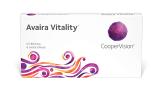
Are you an eye doctor interested in upgrading your patients in a 2-week contact lens? Introduce them to Avaira.
As the only two-week lens to have polyethylene glycol (PEG), as an integral component of the contact lens, Avaira lenses provide comfort for patients. Not only at the end of each day, but during the entire wearing cycle. This is due in part to PEG’s ability to tightly bind water, helping maintain hydration, and helping eliminate the need for rewetting agents. Many patients are also intrinsically familiar with PEG's benefits because it is a key ingredient in leading dry eye relief drops.
The Avaira family of soft contact lenses is the only naturally wettable two-week silicone hydrogel contact lens. Made from a unique material that attracts and binds water to the lens, Avaira lenses stay moist and comfortable without surface treatments or wetting agents that can wash off as you clean your contacts as the result of our unique Aquaform® Technology. It creates a softer, more flexible lens material, which help contribute to Avaira's long-lasting comfort.
If you are attending the American Academy of Optometry Meeting in Phoenix this week, make sure to stop by the CooperVision booth to learn more about how Avaira can help grow your practice. For more information on the Avaira family of contact lenses, click here.
92fec66c-3573-4dee-878f-85517d8f0c0a|0|.0
Posted by CooperVision
on Monday, February 27, 2012
aa3b5148-4256-43e8-bf95-fb58e5d62c63|0|.0
Posted by Harvard Sylvan, OD
on Thursday, March 25, 2010
We have embraced technology in every aspect of our lives – why not take advantage of the technological advances made in contact lens materials? I’d like to talk about two technological advances in contact lens material, each with unique benefits – silicone hydrogel and PC technology.
Silicone hydrogel contact lenses are the most recent development in soft contact lens materials. Silicone is a material that is highly permeable to oxygen. By placing a contact lens on the eye, the amount of oxygen that reaches the cornea is reduced. As a certain amount of oxygen is necessary to maintain corneal health, by incorporating silicone into the contact lens material, a sufficient amount of oxygen can easily travel through the lens and reach the cornea.
The trade off to silicone in a contact lens is that silicone is hydrophobic. That means water will not spread easily across the lens surface, making it difficult to keep the lens wet. That makes a lens uncomfortable. Silicone in a lens also makes it a stiffer material which can reduce comfort as well as irritate the under side of the upper lid. A lens that contains silicone is prone to get deposits on the surface of the lens thus reducing comfort yet again. It is no surprise that the number one reason why people stop wearing contacts is due to discomfort.
As with all technology, improvements are continually being made. Silicone hydrogel contacts have been available since 1999. Each successive generation of silicone hydrogel material brings improvement in the comfort of the lens and overcomes earlier limitations. For example, in prior versions, different coatings or lubricant additives were used to try to improve the lens wettability. The most recently developed silicone hydrogel lenses, which are made by CooperVision, utilize an entirely new silicone hydrogel material. This new material is naturally wettable and does not need coatings or additives. It is also a very soft material and is resistant to certain deposits both of which offer improved comfort.
Biofinity (a monthly replacement lens) and Avaira (a two week replacement lens) are CooperVision’s contact lens brands that are made with the newest silicone hydrogel materials. They have high oxygen permeability, are very soft, are resistant to getting deposits and are very comfortable. Ask your eye care provider if you are a candidate for Biofinity or Avaira contact lenses.
No matter your physiological profile, we have a lens for you. Stay tuned for the next post about CooperVision’s revolutionary lens materials!
e856f075-9027-4478-9d45-30e1492b90ec|0|.0
Posted by Bill Shelly
on Tuesday, December 29, 2009
Hi, I’m Bill Shelly and I’ve been with CooperVision for 22 years. I’d like to share with you what I consider to be the top 5 reasons why I think you should fit your patients in CooperVision lenses… Log In or Register to read more!
0fdc1eb4-48bb-4f11-864a-8be4ceec7297|0|.0